
Background:
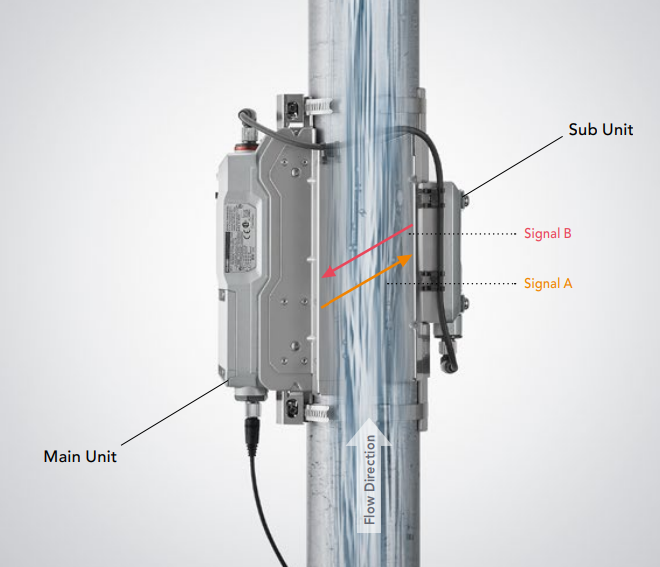
2 out of 98 FM300 devices were recording Phantom Flow readings despite multiple visits and replacements during control pilot/ proof of concept (POC) in ICOP sites. Phantom Flow means devices were registering flow even when water was shut off and it was confirmed that the valve had no leak. Our FM300 devices are ultrasonic sensors manufactured by Keyence (FD-Q/ FD-R series). These types of sensors send electronic pulses (sound waves) back-and-forth across the diameter of the pipe at an angle and measure the resulting transit time. The sound speed of the fluid is known, so when the fluid is not moving or moving in either direction, the ultrasonic sensor can calculate the speed and direction of the fluid based on the time difference measured.
Reason for Phantom Flow
If an FM300 is registering phantom flow, it does not mean the ultrasonic sensor is defective. Ultrasonic sensors are prone to ‘noise’ interference, partially as a tradeoff for their inherently non-invasive design. Ultrasonic measurement technology allows environmental ‘noise’ to be processed and filtered out, as long as the sensors operate above the minimally accepted flow rate (in this case specified by Keyence). This flow rate minimum is called Zero Cut Flow Rate and below this rated flow velocity, the ultrasonic signal may not be able to accurately differentiate flow from no flow. This is because the flow meter's detection capabilities are now programmed to be sensitive enough to pick up other frequencies/ echoes in the environment and trigger false readings.
The Zero Cut flow rate will depend on pipe size and user application. Note, the larger the size of the pipe, the higher the flow rate minimum will be because the ultrasonic pulses will have farther to travel and get disturbed (think about it; larger pipe probably means thicker pipe and with more water flowing through it, there will be more swirls, breaks, and lingering trickles in flow, especially as pipe empties). The table below is the acceptable flow rate minimums per model/ pipe size.
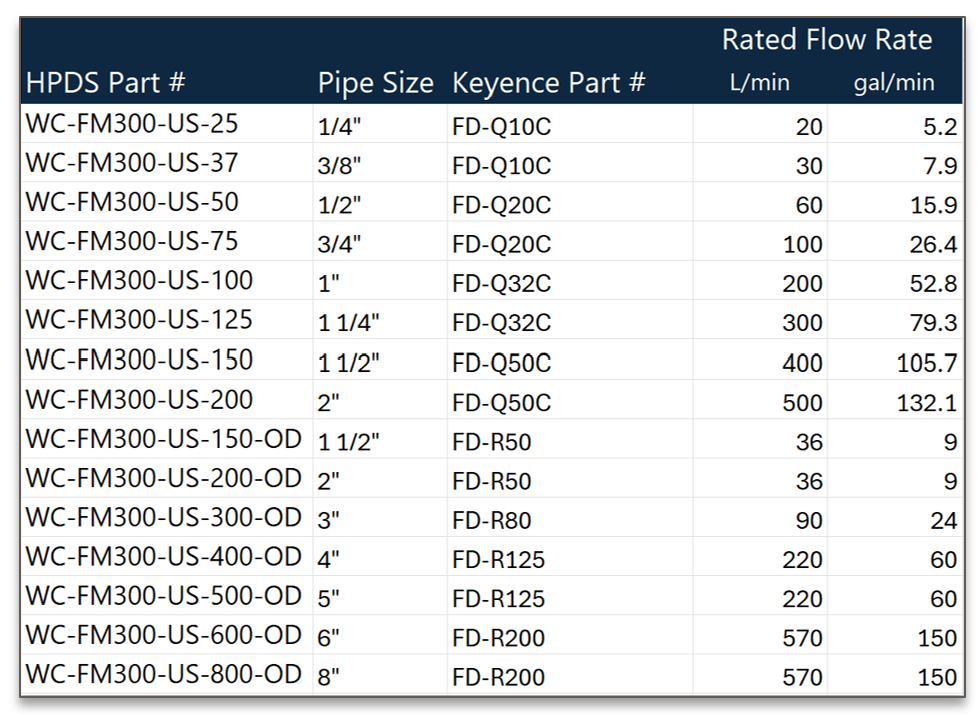
The gap between 0 gal/min and the minimum flow rate is where Phantom flow typically appears. Note, HPDS has set our Keyence zero cut spec to 1 gal/min on all devices to detect the smallest of leaks which leaves us more vulnerable to seeing phantom flow. Although this is acceptable for our application (detecting leaks), it would be problematic in others (controlling flow measurement). Keyence's minimum is therefore a quality guarantee the sensor will read accurately above [x] rate. Differing end-user environments and applications is the reason why zero cut flow rate is adjustable. Remember, wherever this limit is set, any flow measured below it will not be displayed or sent to the output circuit.
Enviromental Factors that contribute to Phantom Flow
It is difficult to determine the exact conditions causing the device to read phantom flow, however we know erroneous readings typically occur in the low flow range of the flow meter's technical capability (pipe emptying out/ no flow). Some Factors include:
- Echo Interference: ambient noise, electrical noise, and frequency noise in the surrounding area (can be fixed by shielding and insulation around FM300) (source)
- Liquid:
- Standing water in the pipe.
- Large air pockets or excessive bubbles, which disturb the passage of ultrasonic pulses across pipe.
- Pulsations or fluctuations in flow velocity distribution, typically due to bends, changes in diameter or vibration in pipes (source). Similarly, if the control valve changes the flow's path, there could be a resulting pressure loss which could also create measurement errors (source).
- Sludge, slurry, scaling (metallic ions in water), slime.
- Pipe Material: detection may be unstable on certain non-standard pipes (i.e. lined pipes) because there are sonar reflections off the non-metallic objects (source).
- Pipe Temp: Can't be greater than 85°C, 185°F
Possible Cures
Phantom flow can be removed by:
- Origin Adjustment Similar to recalibrating a weight scale to zero, this feature on the sensors allows the user to reset the meter to a new zero to filter out erroneous recordings. (see step 4 in Procedure for ‘how to’)
- Change Location Be sure to follow the Keyence FD-Q/ FD-R piping techniques in the installation guide when placing the FM300/350.
Support Procedure:
- If phantom flow is suspected, identify it by this alert <kevin / david>
- Tell customers: “Yes, ultrasonic sensors have been known to be more susceptible to phantom flow readings because they use sound waves to determine flow velocity. Instances of Phantom flow in FM300/ 350 are typically rare, having only occurring in ~1-2% of total devices installed. This is typically the result of the sensor picking up ‘noise’ in the environment, such as standing water in pipe, or ambient/ electrical noise in the room the device is in. If its a special pipe (lined) or large pipe, phantom is also more likely. Phantom flow can be resolved by resetting the origin adjustment but only perform this if the pipe has been confirmed to have no leak. Another option is to move the device to a more suitable location on the pipe based on piping techniques.” Please use above explanation as guide for additional questions.
- How to perform Origin Adjustment:
- Confirm the valve or pipe is in fact not leaking (plumber?).
- Confirm the FM300 is in proper location: Is the room noisy? Use shield to insulate the FM300/350 (kevin / david to specify good v bad spot Piping Techniques).
- Record the average phantom flow rate.
- Shut off the water for at least 5 minutes to ensure there is no flow movement in the pipe.
- Once zero flow is achieved, adjust the origin to above the recorded ‘phantom’ measurement. This will force the meter to ignore the ‘noise’ the device is registering (video/ instructions here)
- Note: let customer know we can also send someone out to perform origin adjustment
- If Customer asks, “Is origin adjustment tampering safe?” reply “Yes, these sensors were designed to have new zeros. In fact, the ultrasonic sensors will autonomously adjust the origin when residue/ buildup in the pipe increases, and the measurements will generally evolve to become more accurate over time.”
- If the issue persists
- If it occurs again, send someone out to change FM300 location. if the room it is operating within is loud, ask if they can use insulation to shield device from the environmental noise.
- Else if issue persists, change out FM300 with FM350 if the pipe diameter is smaller than 4" as the FM350 has greater quality.
- Correct the errors in reading Login to WTC/ Appmanager to manually correct phantom flow, customer will need to provide dates and time frames this occurred.
Alternative Solution:
These are known issues Engineering/ Product has identified during pilot and have compiled alternate solutions:
- Sell in-line meters:
- In-line is invasive (customer has to cut into pipe). However, the customer is already required to cut into the pipe to fit in the control valve. We can have a SKU ready for customer to purchase an in-line meter from us (which are a ~¼ cost to Keyence Ultrasonic sensors (~$1700) and entirely avoid phantom flow errors) and customer's plumber can install both their control valve and our meter in one visit. Plus for pipes that are equal to or greater than 4" require us to cut into pipe regardless. The burden to install in-line meters may translate into loss of customer buy-in. Which is why we shoud continue to offer Keyence as SKU but warn Customers of phantom risk. This way we proactively manage their expectations with managing WC data. Selling in-line meters will require licensed plumbers to cut into pipe, so we either need to recommend plumbers or have path for ProServices to get plumbing license/ certification or the control point applications.
- Sell control valve with in-line meter as packaged, all-in-one solution. current valve already has designed on circuit board ability to communicate with meter.
Sources: FM300 ECO, Jira Ticket, Update product installation guide?