
Problem statement: New Baseline devices exhibiting loud buzzing noise and/or rattling sounds. The issues have been going on since install and continues to get worse over time. Sales has been getting an increasing report from customers and distribution of this issue.
Analysis from transformer manufacture indicates buzzing is a manufacturing defect. Tolerance in the sheet-metal used for cores created two different thickness half cores. Manufacturer enacting process change to utilize sheet-metal from same lot to create half cores. This should allow half cores thickness to be closer. Manufacturer increasing sampling to detect issues.
How to identify: Baseline devices exhibiting loud buzzing noise and/or rattling sounds. Verify the manufacturer label on the transformer. The issues have been isolated to a specific known batch #2241 received from the manufacturer. This can be verified using the label batch code shown below:
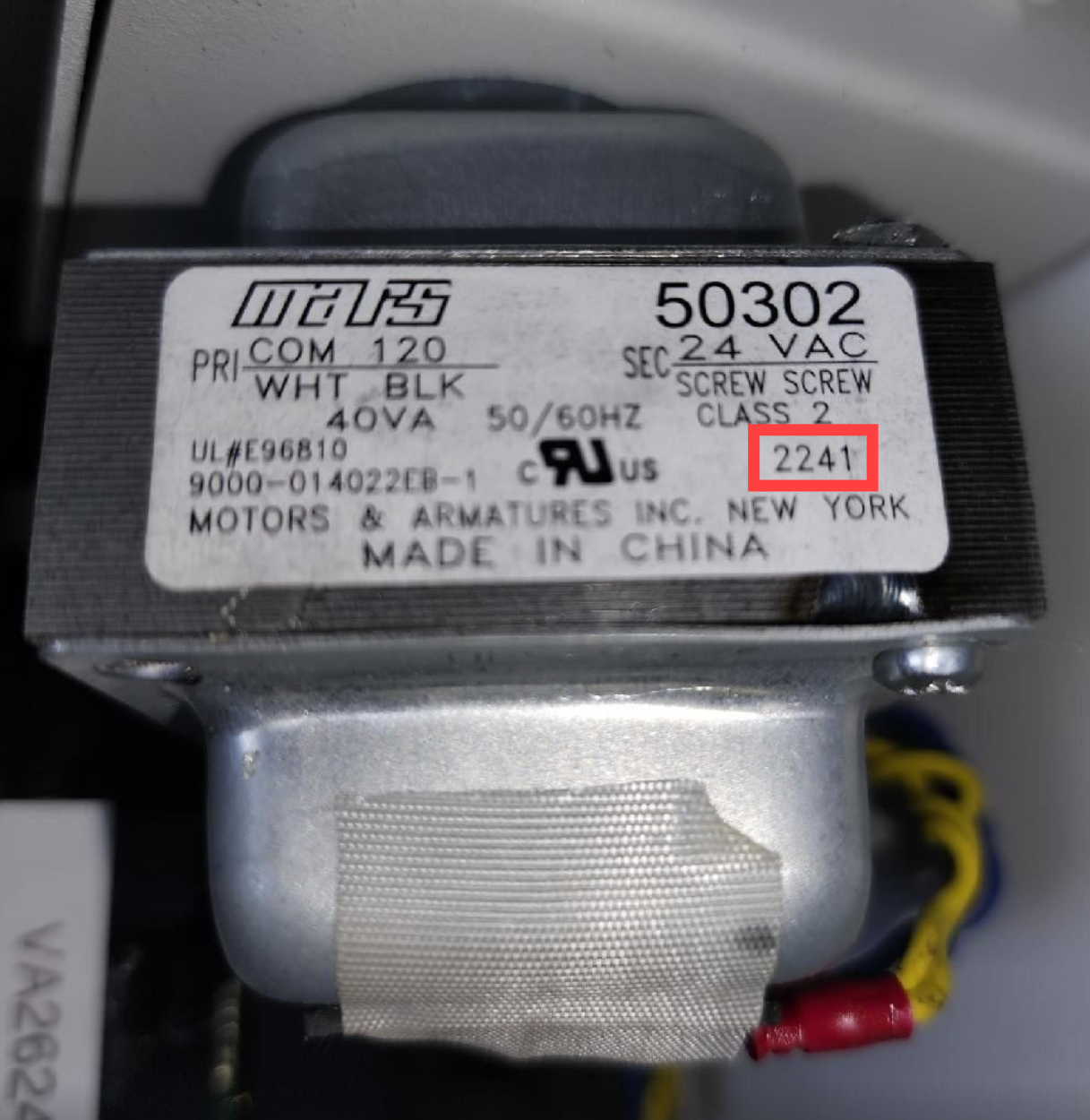
Support Procedure:
Begin with having the customer provide a picture of the transformer(s) manufacturer label as shown above. Be sure to get label photos of all problematic transformers and that they are attached to your support case.
1. If the label is a match for batch #2241, proceed with the RMA process and send them a replacement.
2. If the label is not a match for batch #2241, ask the customer to ensure the two screws on the transformer are sufficiently tightened. Ask them to monitor to confirm if this has significantly reduced the noise to normal operation.
3. If the transformer continues to vibrate and/or buzz, we are to assume the transformer is a manufacturing defect, proceed with the RMA process and send them a replacement.
4. Tell customer: “We have met with the manufacturer of the transformer (MARS), who indicated buzzing was a result of a manufacturing defect from their sheet metal supplier…"
- (problem) “This defect does not affect the operation or performance of the transformer. The noise is from vibrations caused by gaps in two silicon sheets welded together in the transformer. One of the steel parts had a tolerance of +/- 0.1mm and some tolerances led to welded combinations that were uneven, creating ‘noisy gaps’…”
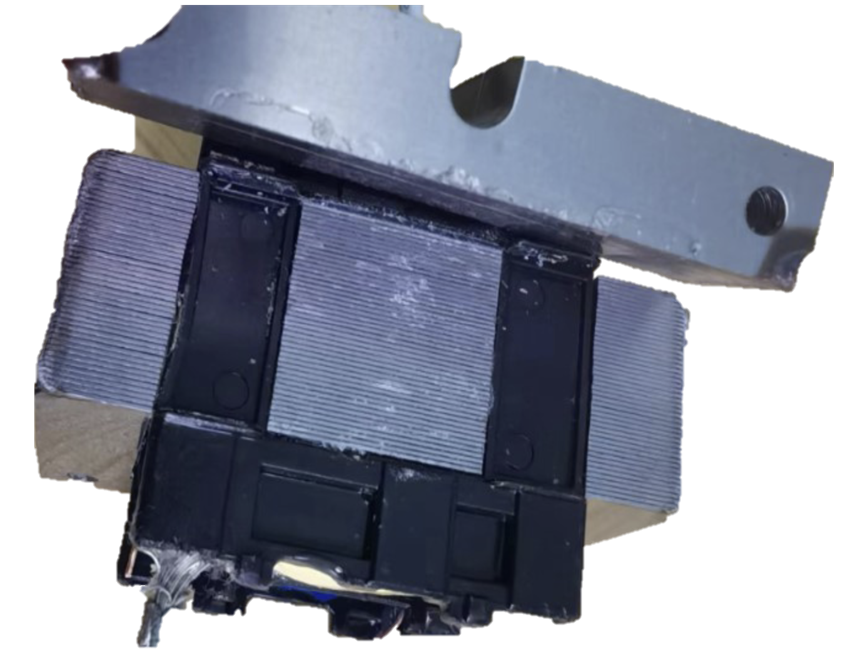
- (supplier solution) “They instructed their sheet metal supplier to only use the upper tolerance for sheet metal cores and use the same batch for the processing and welding of the two parts (sheet E and I) to ensure like thickness (note: slight differences in batches are inherent in manufacturing). Supplier found the noise probability to be 1/500k, and although this can't be completely avoided, they did improve their noise detection QA screening to prevent future issues...”
- (HPDS solution) “Our operations completed a test of all X-Box transformers in stock. Less than 4% have found issue (13 out of 321 rejected). In Oct. 2023, to avert further shipment of bad transformers, operations instituted a temporary process in manufacturing to test transformers for vibration and reject those with abnormally high vibrations. We are also happy to send out the transformer replacement at no charge, however we need the defect transformers returned for further analysis and to return to vendor.”
- Initiate RMA. Make sure to add a return shipping label to the RMA and instruct them to return the buzzing transformer.
How did Transformer Supplier improve noise detection QA? They strengthened the load detection and increased noise inspection during test before shipment.
All mfg. process changes initiated in November 2023 or prior.